


2025 Ford Bronco Sport Gas Mileage & Efficiency

Adventure-Ready Power & Fuel Efficiency
When you want to upgrade your vehicle to one that prioritizes style, comfort, and fuel efficiency, then a 2025 Ford Bronco Sport will take you up on that offer. This trailblazing compact SUV is an excellent choice for drivers seeking a reliable and versatile companion for their daily commutes, off-road fun, and travel. At Ken Wilson Ford, we’re proud to say that the 2025 Ford Bronco Sport gas mileage and its many features will not disappoint you. Visit our Ford dealer in Canton, NC, today for a test drive to experience everything this adventurous SUV has to offer!

Power Under the Hood: Engine & Fuel Efficiency
The 2025 Ford Bronco Sport gives you the option between two powerful and fuel-efficient engines. Standard on lower trims is a 1.5L EcoBoost® engine with eight-speed shiftable automatic transmission and all-wheel drive. This puts out a dependable 181 horsepower and 190 lb.ft. of torque for all of your needs. Your everyday commute is optimized with an efficient 2025 Ford Bronco Sport gas mileage of an EPA-estimated 25 MPG in the city and 29 MPG on the highway. This also allows for a combined 2025 Ford Bronco Sport fuel economy of 26 MPG. Selecting the available 2.0L EcoBoost® engine with eight-speed automatic transmission amplifies the power your SUV is capable of, by providing you with 250 horsepower and 275 lb.ft. of torque. This can be used to your advantage when you trail the unknown. This engine also gives you an EPA-estimated 21 MPG in the city, 26 MPG on the highway, and a combined 2025 Ford Bronco fuel economy of 23 MPG. This is enough power to fuel any off-road adventures. Taking a look at the 2025 Ford Bronco Sport’s gas tank size, you’ll discover that 16 gal. are available. And when selecting the gas type for the 2025 Ford Bronco Sport, each trim sufficiently runs with regular unleaded.

What Affects the Ford Bronco Sport’s Gas Mileage?
Several factors can influence the fuel efficiency of your Ford Bronco Sport, as well as any other vehicle you decide to drive. What it stems from is your driving habits, with city driving often yielding lower gas mileage compared to highway driving due to frequent stopping and starting. Understanding these factors will help you minimize fuel consumption for a more productive driving experience. Let’s delve into what might be impacting the gas mileage in your 2025 Ford Bronco Sport.
Driving Habits
- Aggressive Driving: Rapid acceleration, harsh braking, and speeding all contribute to higher fuel usage.
- Excessive Idling: Leaving the engine running while stationary leads to unnecessary fuel wastage.
- Sudden Acceleration: Quickly pushing the gas pedal can cause a notable increase in fuel consumption.
- Frequent Hard Braking: Constantly slamming on the brakes leads to more fuel being burned.
Vehicle Factors
- Low Tire Pressure: Tires that are under-inflated create more drag, which can lower your 2025 Ford Bronco Sport’s gas mileage.
- Clogged Air Filters: When air filters become dirty or blocked, they hinder airflow, leading to reduced fuel efficiency.
- Extra Weight and Roof Racks: Carrying extra weight or using roof racks can create additional resistance, decreasing fuel efficiency.
External Factors
- Adverse Weather: Harsh weather, including extreme heat, cold, wind, and rain, can negatively impact fuel efficiency.
- Rough Terrain: Navigating hilly or uneven roads requires more fuel due to increased engine effort.
- Traffic Jams: Frequent stopping and starting in heavy traffic can lead to greater fuel consumption.

How to Maximize Your Fuel Efficiency
You can boost your overall efficiency by adopting good driving habits, keeping up with vehicle maintenance, and making other smart choices. Let’s take a look at what you can do to improve your 2025 Ford Bronco Sport’s gas mileage.
Driving Habits
- Gradual Acceleration and Braking: Gradually accelerate and decelerate to avoid unnecessary fuel consumption from sudden speed changes.
- Keep a Consistent Speed: Try to maintain a steady pace, particularly on highways. Using cruise control can help stabilize your speed over long distances.
- Plan for Traffic: Stay alert to traffic ahead and adjust your speed early to prevent abrupt stops or starts.
- Turn Off Your Engine When Idle: If you’re stopped for a while, turn off your engine to save fuel.
Vehicle Maintenance
- Regular Oil Changes: Ensure your engine is well-lubricated for optimal performance and fuel efficiency.
- Tire Pressure: Check your tire pressure regularly. Low or underinflated tires can increase rolling resistance and reduce fuel efficiency.
- Tire Alignment and Rotation: Proper tire alignment and rotation can help ensure even wear and improve fuel economy.
- Consistent Engine Maintenance: Regular tune-ups help your engine run more efficiently and reduce fuel consumption.
Optimize Your Drive
Take on the roads more efficiently with tips about the 2025 Ford Bronco Sport gas mileage. Visit Ken Wilson Ford to test-drive your next fuel-efficient model!
2025 Ford Maverick Gas Mileage & Efficiency

The 2025 Ford Maverick Gas Mileage
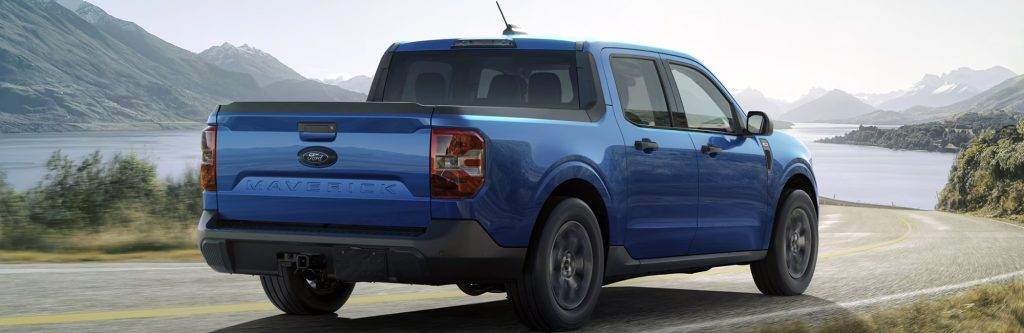
Looking for a compact truck that offers a perfect blend of style, comfort, and impressive fuel efficiency? Look no further than the 2025 Ford Maverick. This model is an excellent choice for drivers seeking a reliable and eco-conscious vehicle for their daily commutes, light work, and travel. At Ken Wilson Ford, we’re proud to offer the latest Ford Maverick, designed with fuel economy at its core and packed with features that enhance both driver comfort and convenience. Visit our Ford dealer in Canton, NC, today for a test drive to experience everything this exceptional truck has to offer!

Power Under the Hood: Engine & Fuel Efficiency
The 2025 Ford Maverick gives you the option between two powerful and fuel-efficient engines. Standard on lower trims is a 2.5L hybrid engine with automatic continuously variable transmission. This puts out a dependable 191 horsepower and 155 lb.ft. of torque for all of your needs. Your everyday commute is also optimized with an efficient 2025 Ford Maverick hybrid gas mileage of an EPA-estimated 42 MPG in the city. Selecting the available 2.0L EcoBoost® with eight-speed automatic transmission amplifies the power your truck is capable of, by providing you with 238 horsepower and 275 lb.ft. of torque. This can be used to your advantage when you trail the unknown. Get in touch with us to discover the gas mileage of the 2025 Ford Maverick when it only uses gas. Taking a look at the 2025 Ford Maverick’s gas tank size, you’ll discover that 13.8 gal. are available when the 2.5L hybrid engine is chosen, giving you a chance to regeneratively charge your battery. With the available 2.0L EcoBoost® engine, you’ll also have a fuel capacity of 16.8 gal. to maximize how much you can add for all your travels. When it comes to deciding on the 2025 Ford Maverick’s gas type, each trim and drive type sufficiently runs with regular unleaded.
What Affects the Ford Maverick’s Gas Mileage?
Several factors can influence the fuel efficiency of your Ford Maverick, as well as any other vehicle you decide to drive. What it stems from is your driving habits, with city driving often yielding lower gas mileage compared to highway driving. Understanding these factors will help you minimize fuel consumption for a more productive driving experience. Let’s delve into what might be impacting your gas mileage in the 2025 Ford Maverick.
Driving Habits
- Aggressive Driving: Rapid acceleration, harsh braking, and speeding all contribute to higher fuel usage.
- Excessive Idling: Leaving the engine running while stationary leads to unnecessary fuel wastage.
- Sudden Acceleration: Quickly pushing the gas pedal can cause a notable increase in fuel consumption.
- Frequent Hard Braking: Constantly slamming on the brakes leads to more fuel being burned.
Vehicle Factors
- Low Tire Pressure: Tires that are under-inflated create more drag, which can lower your vehicle’s fuel economy.
- Clogged Air Filters: When air filters become dirty or blocked, they hinder airflow, leading to reduced fuel efficiency.
- Extra Weight and Roof Racks: Carrying extra load or using roof racks can create additional resistance, decreasing fuel efficiency.
External Factors
- Adverse Weather: Harsh weather, including extreme heat, cold, wind, and rain, can negatively impact fuel efficiency.
- Rough Terrain: Navigating hilly or uneven roads requires more fuel due to increased engine effort.
- Traffic Jams: Frequent stopping and starting in heavy traffic can lead to greater fuel consumption.

How to Maximize Your Fuel Efficiency
You can boost your overall efficiency by adopting good driving habits, keeping up with vehicle maintenance, and making other smart choices. Let’s take a look at what you can do to improve your 2025 Ford Maverick’s gas mileage.
Driving Habits
- Gradual Acceleration and Braking: Gradually accelerate and decelerate to avoid unnecessary fuel consumption from sudden speed changes.
- Keep a Consistent Speed: Try to maintain a steady pace, particularly on highways. Using cruise control can help stabilize your speed over long distances.
- Plan for Traffic: Stay alert to traffic ahead and adjust your speed early to prevent abrupt stops or starts.
- Turn Off Your Engine When Idle: If you’re stopped for a while, turn off your engine to save fuel.
Vehicle Maintenance
- Regular Oil Changes: Ensure your engine is well-lubricated for optimal performance and fuel efficiency.
- Tire Pressure: Check your tire pressure regularly. Low or underinflated tires can increase rolling resistance and reduce fuel efficiency.
- Tire Alignment and Rotation: Proper tire alignment and rotation can help ensure even wear and improve fuel economy.
- Consistent Engine Maintenance: Regular tune-ups help your engine run more efficiently and reduce fuel consumption.
Optimize Your Drive
Take on the roads more efficiently with tips about the 2025 Ford Maverick gas mileage. Visit Ken Wilson Ford to test drive your next fuel-efficient model!
2025 Ford Escape Gas Mileage & Efficiency

The 2025 Ford Escape Gas Mileage
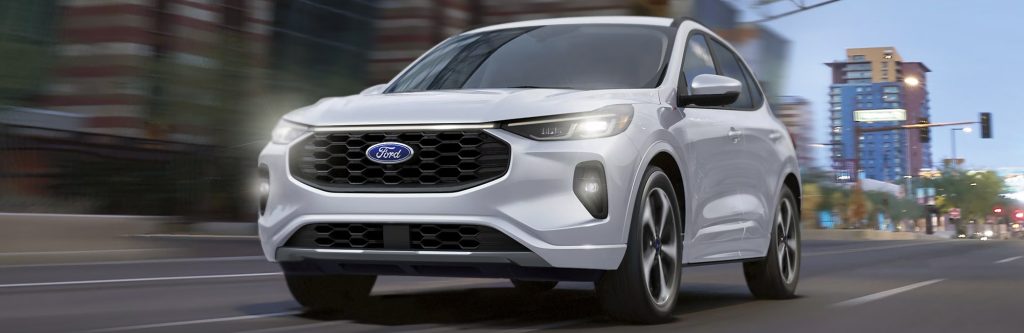
Looking for a compact SUV that offers a perfect blend of style, comfort, and impressive fuel efficiency? Look no further than the 2025 Ford Escape. This model is an excellent choice for drivers seeking a reliable and eco-conscious vehicle for their daily commutes and road trips. At Ken Wilson Ford, we’re proud to offer the latest Ford Escape, designed with fuel economy at its core and packed with features that enhance both driver comfort and convenience. Visit our Ford dealer in Canton, NC, today for a test drive to experience everything this exceptional SUV has to offer!

Power Under the Hood: Engine & Fuel Efficiency
The 2025 Ford Escape gives you the option to drive Front-Wheel Drive or All-Wheel Drive and comes equipped with a standard 1.5L EcoBoost® engine. The eight-speed automatic transmission that it uses provides you with a smooth and responsive ride with 180 horsepower and 199 lb.-ft. of torque. On FWD models, this engine offers impressive fuel efficiency, delivering up to an EPA-estimated 27 MPG in the city, 34 MPG on the highway, and 30 MPG combined. Meanwhile, the 2025 Ford Escape’s fuel economy for AWD models will experience a slightly lower output, performing with 26 MPG in the city, 32 MPG on the highway, and 28 MPG combined. If you want to achieve the most fuel efficiency out of this ride, you’ll want to check out the 2025 Ford Escape’s hybrid gas mileage. Whether you select the plug-in hybrid trim or opt for the available 2.5L I-4 full hybrid engine, the Ford Escape’s fuel efficiency reaches up to an impressive EPA-estimated 42 MPG in the city, 36 MPG on the highway, and 39 MPG combined. This allows you to go much further on your travels without having to stop for gas as often.
Juicing Your Ride: Tank Size & Fuel Type
Taking a look at the 2025 Ford Escape’s gas tank size, you’ll discover that 14.8 gal. are available for FWD options and 15.7 gal. are available for AWD options for the standard 1.5L engine. With the available 2.0L EcoBoost® engine, you’ll also have a fuel capacity of 15.7 gal. for both drive types. If you decide to drive with the 2.5L hybrid engine, you’ll have 14.3 gal. in available gas capacity, while the 2025 Ford Escape Plug-In Hybrid gives you 11.1 gal. When it comes to deciding on the 2025 Ford Escape’s gas type, each trim and drive type sufficiently runs with regular unleaded. However, under the available 2.0L engine, premium fuel is recommended since that powertrain puts out higher horsepower and torque.
What Affects the Ford Escape’s Gas Mileage?
Several factors can influence the fuel efficiency of your Ford Escape, as well as any other vehicle you decide to drive. What it stems from is your driving habits, with city driving often yielding lower gas mileage compared to highway driving. Understanding these factors will help you minimize fuel consumption for a more productive driving experience. Let’s delve into what might be impacting your gas mileage in the 2025 Ford Escape.
Driving Habits
- Aggressive Driving: Rapid acceleration, harsh braking, and speeding all contribute to higher fuel usage.
- Excessive Idling: Leaving the engine running while stationary leads to unnecessary fuel wastage.
- Sudden Acceleration: Quickly pushing the gas pedal can cause a notable increase in fuel consumption.
- Frequent Hard Braking: Constantly slamming on the brakes leads to more fuel being burned.
Vehicle Factors
- Low Tire Pressure: Tires that are under-inflated create more drag, which can lower your vehicle’s fuel economy.
- Clogged Air Filters: When air filters become dirty or blocked, they hinder airflow, leading to reduced fuel efficiency.
- Extra Weight and Roof Racks: Carrying extra load or using roof racks can create additional resistance, decreasing fuel efficiency.
External Factors
- Adverse Weather: Harsh weather, including extreme heat, cold, wind, and rain, can negatively impact fuel efficiency.
- Rough Terrain: Navigating hilly or uneven roads requires more fuel due to increased engine effort.
- Traffic Jams: Frequent stopping and starting in heavy traffic can lead to greater fuel consumption.

How to Maximize Your Fuel Efficiency
You can boost your overall efficiency by adopting good driving habits, keeping up with vehicle maintenance, and making other smart choices. Let’s take a look at what you can do to improve your 2025 Ford Escape’s gas mileage.
Driving Habits
- Gradual Acceleration and Braking: Gradually accelerate and decelerate to avoid unnecessary fuel consumption from sudden speed changes.
- Keep a Consistent Speed: Try to maintain a steady pace, particularly on highways. Using cruise control can help stabilize your speed over long distances.
- Plan for Traffic: Stay alert to traffic ahead and adjust your speed early to prevent abrupt stops or starts.
- Turn Off Your Engine When Idle: If you’re stopped for a while, turn off your engine to save fuel.
Vehicle Maintenance
- Regular Oil Changes: Ensure your engine is well-lubricated for optimal performance and fuel efficiency.
- Tire Pressure: Check your tire pressure regularly. Low or underinflated tires can increase rolling resistance and reduce fuel efficiency.
- Tire Alignment and Rotation: Proper tire alignment and rotation can help ensure even wear and improve fuel economy.
- Consistent Engine Maintenance: Regular tune-ups help your engine run more efficiently and reduce fuel consumption.
Optimize Your Drive
Take on the roads more efficiently with tips about the 2025 Ford Escape gas mileage. Visit Ken Wilson Ford to test drive your next fuel-efficient model!
How To Save Gas: Gas Saving Tips

Effective Strategies To Save Gas & Maximize Fuel Efficiency
In an era of rising fuel prices and environmental concerns, the need to save gas with a fuel-efficient car has never been more critical. Whether you’re commuting to work, running errands, or going on a road trip, the way you drive can significantly impact your fuel consumption. There are numerous driving techniques and lifestyle changes that can help you use less gas and save money, while also contributing to a healthier planet. At Ken Wilson Ford, we’ll explore various gas-saving tips, focusing on effective driving strategies and behavioral adjustments that’ll allow you to maximize fuel efficiency.

The Importance of Driving Habits
One of the most straightforward ways to save gas is by adopting more fuel-efficient driving habits. This doesn’t mean you have to walk or bike everywhere you go, but that is an option! The way you operate your vehicle can have a profound effect on how much fuel it consumes. Simple changes such as avoiding rapid acceleration, reducing idling, and maintaining a conservative speed can help you use less gas. Aggressive driving behaviors, like speeding, hard braking, and rapid acceleration, can reduce fuel efficiency by 15–30% on the highway and 10–40% in the city.
Proper Maintenance
Another essential aspect of saving gas is vehicle maintenance. Keeping your car in good working condition by performing tasks like oil changes, replacing air filters, and ensuring tire pressure is at the optimal level are crucial to fuel savings. Fuel efficiency can decrease if tires are not properly inflated. And during oil changes, using the correct grade for your vehicle can also improve fuel economy. Check your owner’s manual to make sure you’re using the correct type. Get in touch with our staff at Ken Wilson Ford to schedule service, and make sure to ask about any service specials we have in store!
Driving Techniques to Save Fuel
Adopting smoother driving techniques is another crucial step in saving gas. “Stop-and-go” driving, where you frequently accelerate and brake, wastes a significant amount of fuel. To optimize how to save gas while driving, you should strive for smooth acceleration and braking. This means avoiding sudden acceleration from a stop and coasting to a stop whenever possible. Additionally, shifting gears at the appropriate RPM can help optimize fuel efficiency in manual transmission vehicles.
Another technique that can significantly reduce fuel consumption is anticipatory driving. This method involves looking ahead and adjusting your speed based on traffic conditions to avoid unnecessary braking and acceleration. For instance, if you notice that traffic is slowing ahead, it’s better to ease off the accelerator and coast rather than wait until the last moment to brake. This not only saves gas but also reduces wear and tear on the braking system.

Most Fuel-Efficient Way to Drive
While air conditioning can provide comfort during hot weather, it comes at a cost in terms of fuel efficiency. Using the AC increases fuel consumption significantly depending on the vehicle and driving conditions. Roof racks and spoilers can also reduce your vehicle’s fuel efficiency by creating additional drag. If you’re not using a roof rack or carrier, it’s best to remove it to reduce unnecessary wind resistance.
The Impact of Weight on Fuel Consumption
Another often overlooked factor in fuel efficiency is the vehicle’s weight. The more weight a car carries, the harder the engine has to work to move it, thereby consuming more fuel. It’s advisable to avoid keeping unnecessary heavy items in the car, especially on long trips. Therefore, regularly cleaning out your vehicle and removing any excess weight can have a noticeable impact on fuel consumption.
Driving Options: Engine Types, Hybrid, and EV Models
Ford is committed to providing fuel-efficient options for drivers seeking to save on gas and maximize their mileage. You have a selection of electric vehicles that offer zero tailpipe emissions and the ability to recharge at home, including the Ford F-150 Lightning and Ford Mustang Mach-E. For those who prefer a hybrid solution, Ford has Ford Escape, F-150, and Maverick engine options that combine gasoline and electric power for improved range and reduced reliance on fossil fuels. Additionally, Ford’s hybrid engines seamlessly integrate electric motors with traditional gasoline engines, optimizing performance and efficiency. And for drivers who prefer gasoline-powered vehicles, Ford’s EcoBoost® engines deliver impressive fuel efficiency without sacrificing power or performance. With these diverse options for how to save gas, Ford empowers you to make informed choices that align with your environmental and budgetary goals.
Mastering Fuel Efficiency
In light of fluctuating fuel prices and environmental concerns, gas-saving practices become increasingly crucial. Saving gas and improving fuel efficiency involves a multifaceted approach that encompasses driving habits, vehicle maintenance, and understanding fuel consumption factors. The purchase of Ford EVs, hybrids, and the use of EcoBoost® and hybrid engines are also sustainable options for saving on fuel consumption. Start making a difference by visiting Ken Wilson Ford to select the vehicle most suited to the driving habits that’ll help you save on gas.
How Much Does A Hybrid Save On Gas?
A Look At Ford Hybrids & Their Fuel Efficiency
Hybrid technology in cars is changing the way most people drive. As a middle ground between gas and electric models, hybrid cars grab the best from both worlds. If you decide to drive a Ford, you have some options that provide a balance of performance and fuel efficiency, making them an attractive option for eco-conscious drivers. Ken Wilson Ford will explore the economic benefits of Ford hybrid models, focusing on their fuel savings potential and overall cost-effectiveness, in order to answer the question of how much a hybrid saves on gas. Get ready to choose your next ride from Canton, NC!
Benefits of Hybrid Vehicles
Before we delve into how much a hybrid can save on gas, let’s take a look at some of the benefits of owning one. By combining a conventional engine with an electric motor, hybrid cars achieve better fuel efficiency, which translates to cost savings at the pump. Hybrid cars also produce fewer emissions, making them a more environmentally friendly option. With the rising cost of fuel and increasing concerns about climate change, you can look into hybrid cars to save money and reduce your carbon footprint.
How Ford Hybrids Work
Ford hybrids use a combination of a conventional engine and an electric motor to achieve improved fuel efficiency. The electric motor is powered by a battery pack, which is charged by the engine and through regenerative braking. When the car is in motion, the electric motor assists the engine, reducing the load and improving fuel efficiency. The battery pack is also used to power the car alone at low speeds, such as in city driving or when idling. With this information, you can see how much a hybrid can save on gas.
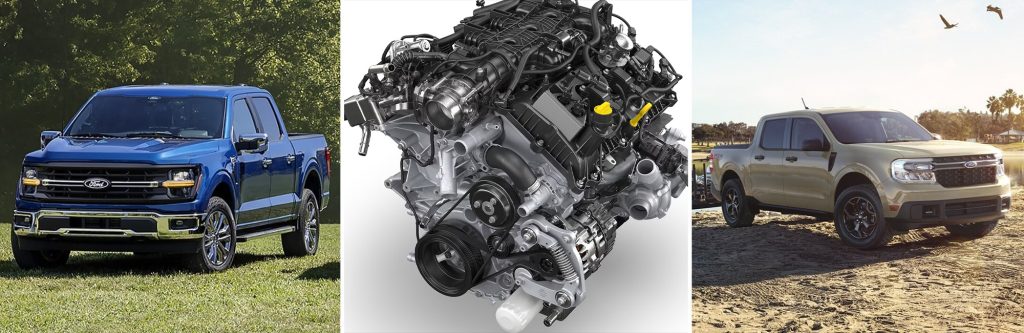
Ford’s hybrid system is designed to optimize fuel efficiency, while also providing a smooth and quiet ride. You can choose the Ford Escape Plug-In Hybrid option or the full hybrid engine it offers on lower trim levels. The Ford F-150 and Ford Maverick also have full hybrid engine options to best suit your needs and driving habits. These contribute to how much a hybrid can save on gas.

Fuel Economy: Gas & Hybrid Cars MPG Comparison
When comparing the MPG of different Ford hybrid models, several factors come into play, including the specific model, driving conditions, and driving habits. In general, Ford hybrids tend to offer significantly higher MPG ratings than their gasoline-only counterparts. This is especially evident in city driving, where the electric motor can assist during stop-and-go traffic, reducing reliance on the gasoline engine.
Taking a look at the 2024 Ford Escape Plug-in Hybrid model, you can get an EPA-estimated 42 MPG in the city and 36 MPG on the highway. This translates to an impressive 39 MPG combined. On the other hand, a gas-powered 2024 Ford Escape achieves up to an EPA-estimated 27 MPG in the city and up to 34 MPG on the highway. Combined, you can expect 30 MPG. This disparity in fuel consumption can lead to substantial savings over the lifetime of the vehicle.
How Much Does a Hybrid Save on Gas?
Ford hybrids are renowned for their ability to significantly reduce fuel consumption. The electric motor assists the gasoline engine, particularly during acceleration and low-speed driving, resulting in improved fuel efficiency. Evaluating monthly savings related to vehicle fuel consumption shows that these costs can vary with mileage and fuel prices, making it essential to understand vehicle efficiency and budgeting. Depending on the model you select, you can see how much hybrids can save on gas. If you visit the EPA’s fuel economy website, you can customize your driving habits and vehicle in order to estimate your potential savings.
The long-term financial benefits extend beyond fuel savings between hybrid and gas-powered models. While the initial purchase price of a hybrid may be higher than a comparable gasoline-powered vehicle, the accumulated savings from reduced fuel costs can offset this difference over time. Get in touch with our dealers to find out which Ford hybrids qualify for government tax incentives and rebates up to $3,750.* Qualifying hybrids will save you an even greater amount of money compared to gas vehicles.
Choose Your Hybrid
ord hybrids have emerged as a compelling option for consumers seeking to reduce their environmental impact and lower their fuel costs. By combining a gasoline engine with an electric motor, these vehicles show how much a hybrid can save on gas and optimize fuel efficiency. While the initial purchase price may be higher, the long-term financial benefits of owning a Ford hybrid can outweigh the upfront cost. As technology continues to advance, Ford hybrids are expected to become even more efficient and affordable, making them a viable choice for a growing number of drivers. How much does a hybrid save one gas? Find out by selecting your next hybrid Ford from Ken Wilson Ford today!
*Please consult with your own tax or legal professional to determine your individual eligibility. Tax credit amount is based on vehicle-specific component, sourcing and assembly and may be subject to change. You may not claim the credit if (1) your adjusted gross income exceeds certain thresholds or (2) the MSRP of the vehicle, as configured, exceeds $80,000 (including all optional equipment attached to the vehicle at the time of delivery to the dealer, but excluding destination charges, optional items added by the dealer, taxes and fees). Tax credit may be applied at point of sale, subject to dealer availability, or as a potential future tax savings. The amount of your tax savings will depend on your individual tax circumstances. Incentives and additional rebates are not within Ford’s control. This information does not constitute tax or legal advice. For additional information go to https://www.fueleconomy.gov/feg/tax2023.shtml.
How Much Do EVs Save On Gas?
How Much Do Electric Cars Save On Gas? A Look At Ford EVs
The transition to electric vehicles is gaining momentum as consumers seek more sustainable and affordable transportation options. The average fuel economy for gas vehicles varies between models as each model serves a different purpose for your daily commute. However, in the case of EVs, you’ll notice a spike in the amount of distance you can cover for less than the price you’d pay for gas. Ford has created a diverse range of hybrids and EVs that not only reduce carbon emissions, but also provide you with significant financial benefits. Ken Wilson Ford will delve into how much electric cars can save on gas compared to traditional gas-powered vehicles.
Charging Your Ford: What to Know
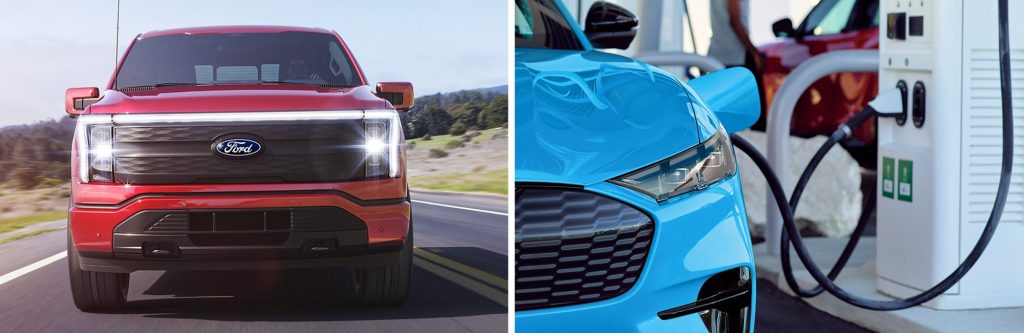
Charging an electric car is straightforward, with public charging stations becoming increasingly common. But when it comes to the kind of charging station you should use for your EV, you need to consider its charging capacity, make, model, and ideal charging level. There are a variety of charging options you should familiarize yourself with to see how much electric cars are saving on gas, including some Ford EV charging options. At the base level, three charging options are available: Level 1/Home Charging, Level 2, and Level 3/Fast Charging. We’ll explore each one individually. Level 1 is intended for longer charging periods and is commonly installed in homes. Public charging stations offer Level 2 and Level 3 options. Whether you desire to add a quick charge to your battery or you need it charged in a shorter time period, Level 2 and Level 3 are your best choices. The cost of public charging varies depending on the location and type of charger, but many stations offer competitive rates or even free charging to attract EV owners.
Ford also provides you with home charging options, allowing you to see how much electric cars save on gas if you decide to go with one of their electric models, including the Ford F-150 Lightning, the Ford Mustang Mach-E, and the Ford E-Transit. The Ford Charge Station Pro and the Ford Connected Charge Station are examples of Level 2 chargers that allow you to stay consistent with your manufacturer’s optimal method of reenergizing your ride.

How Much Money Do You Save With An Electric Car?
While the initial cost of purchasing an EV may be higher than a comparable gasoline-powered car, the long-term savings can offset this difference. The EV charging cost vs. gas is significantly reduced since you can fuel your ride from home, adding to your personal electric bill instead of going to a gas station and paying per gallon. The exact amount of how much electric cars save on gas will vary depending on factors such as local electricity rates, driving habits, and the efficiency of the EV model. On the other hand, the volatility of gas prices and rising costs can influence your decisions regarding vehicle purchases and fuel expenses, making EVs a more financially attractive option in your research to see how much electric cars save you on gas.
EV owners can also benefit from lower maintenance costs. Electric motors have fewer moving parts than internal combustion engines that gas-powered models possess, reducing the need for frequent repairs and replacements. Additionally, EVs typically require less routine maintenance, such as oil changes and tune-ups. These factors, as well as considerate driving habits, can result in significant savings over the vehicle’s lifetime.
Gas vs. Electric Cars Savings
To illustrate how much electric cars save on gas, let’s compare the Ford Mustang Mach-E to a similar gas car. Assuming an average driving distance of 15,000 miles per year and local electricity and gasoline prices, the Ford Mustang Mach-E could save thousands of dollars in fuel costs alone over a five-year period compared to a gas vehicle. Moreover, the reduced maintenance costs associated with the EV would further increase the overall savings compared to gas vehicles. This is so because when you consider the cost per mile, EV owners typically pay an average of $0.05 per mile, while gas-powered car drivers face an average cost of $0.13 per mile. This disparity highlights the economic advantage of EVs in terms of fuel efficiency. No matter what regional gas prices are in your area, you can see how much electric cars save on gas.
Electrify Your Next Ride
Ford electric vehicles offer a compelling combination of environmental benefits, technological advancements, and significant cost savings when considering how much electric cars save on gas. By eliminating gasoline costs and reducing maintenance expenses, EV owners can enjoy substantial financial benefits over the long term. As the availability and affordability of EVs continue to improve, it’s likely that they’ll become an increasingly popular choice for consumers seeking a sustainable and economical transportation solution. Start shopping for your EV by visiting Ken Wilson Ford today!
Ford New Car Warranty: Coverage For Your Next Car
Car buyers should be aware that purchasing a new vehicle is a significant financial commitment that requires careful consideration. A new car warranty offers crucial protection against unexpected repair costs, safeguarding your investment. At Ken Wilson Ford, we’ll inform you of the benefits of new car warranties, explore their coverage, and compare warranties offered by Ford. We’ll also provide you with insight into maximizing these new car warranty benefits, as well as taking a look at the value of extended warranties. Start shopping for your next ride from our Ford dealer in Canton, NC.

Understanding the Benefits of New Car Warranties
A new car warranty is a contractual agreement between you and the vehicle manufacturer, outlining specific coverage for repairs and replacements due to defects in materials and workmanship. No matter what brand of vehicle you choose to drive, there are generally two primary components of a new car warranty: the bumper-to-bumper warranty and the powertrain warranty. The bumper-to-bumper, or limited, warranty covers a wide range of components and systems, providing coverage that typically lasts for up to 3 years or 36,000 miles. The powertrain warranty specifically protects the engine, transmission, drive axles, and other internal parts. New car warranties offer several other advantages, from helping to maintain the vehicle’s resale value by ensuring it remains in good condition to alleviating the stress associated with unexpected repair costs. A vehicle with a comprehensive warranty, such as the Ford warranty, is generally more attractive, as it allows you to enjoy your next ride without financial worries.
What Does A New Car Warranty Cover?
While all new car warranties share fundamental elements, specific terms and conditions vary significantly among manufacturers. When you drive a new Ford, there’s a 3-year or 36,000-mile limited warranty and a 5-year or 60,000-mile limited powertrain warranty, which includes essential components like the cylinder block, internal transmission parts, and gaskets. Diesel models like the Ford Super Duty trucks have a Power Stroke® Diesel Warranty, granting you coverage up to 5 years or 100,000 miles. And if you drive a Ford EV or a hybrid car, components are covered for up to 8 years or 100,000 miles. However, it’s essential to note that these terms can vary based on the specific model and trim level. Ford also provides additional coverage for corrosion perforation, roadside assistance, and specific components like the air conditioning system. To extend coverage beyond the standard warranty, you’ll be able to access the Ford Protect Extended Service Plan, which we’ll cover in more detail.
Factors Influencing Warranty Coverage
Several factors can influence the specific terms and benefits of a new car warranty, such as the vehicle’s model, trim level, and intended use. Different types of vehicles, including standard passenger vehicles and commercial vehicles, have varying warranty terms and conditions. Additionally, commercial use or off-road driving may have limitations or exclusions, and understanding these factors is crucial when comparing warranties and making informed decisions. To fully leverage the benefits of a new car warranty, you should prioritize regular vehicle maintenance according to the manufacturer’s recommendations. Proper maintenance helps prevent issues and demonstrates care for the vehicle. Plus, understanding the warranty terms, including limitations and exclusions, is essential. Keeping detailed records of all maintenance and repair work is crucial in case of warranty claims.

Extended Warranties Customizable For You
Extended warranties offer coverage beyond the standard factory warranty. These optional new car warranties, also known as vehicle service contracts, provide benefits for you if you anticipate keeping your vehicle for an extended period. Additionally, they offer extra protection by enhancing your existing packages with additional safety and security features. Extended warranties typically cover components like the engine, transmission, air conditioning, and electrical systems. However, it’s essential to carefully review the terms and conditions of extended warranties, as coverage can vary significantly. Some extended warranties may have higher deductibles or limitations on covered repairs. Overall, these new car warranties benefit you since they’re more tailored to your driving habits, ensuring you’re getting optimal coverage.
What Does Ford Protect Cover?
Sometimes, basic coverage isn’t enough, and you’re going to want to reap as many benefits of a new car warranty as possible. This is what the Ford Protect Extended Service Plan is for. Only you know your driving habits, so having customizable coverage options will undoubtedly work in your favor if things take a turn for the worst on the road. Some options from Ford’s diverse plans include maintenance, anti-theft warnings, protecting your ride’s interior and exterior surfaces, tires, windshield, dents, and so much more, depending on your individual needs.
Shop Crossroads
A new car warranty is a valuable asset that provides financial security and peace of mind. By carefully reviewing your options from our Ford dealer, you can make informed decisions. Adhering to recommended maintenance and keeping thorough records will help maximize the benefits of a new car warranty. Additionally, considering the purchase of an extended warranty can provide you with further protection and peace of mind for your ride. Get in touch with Ken Wilson Ford to find the coverage that’s right for you.
Is It Cheaper To Insure a New Car Or a Used Car?

New vs. Used: Exploring the Cost of Car Insurance
The decision of buying a new car versus a used one often hinges on financial considerations. While the initial purchase price typically takes center stage, insurance costs also play a significant role in the overall equation. Understanding if it’s cheaper to insure a new car or a used car empowers you to make a more informed decision. There’s no simple answer to this question, as this value depends on several factors that have a direct influence on car insurance costs. Ken Wilson Ford has put together a comprehensive guide to delve deeper into the factors that determine your car insurance premium.
Is It Cheaper To Insure A New Car Or A Used Car?
Knowing what affects the insurance cost for a new or used Ford vehicle is crucial information to have in mind when you decide to purchase your ride. From there you can use your judgment to decide if it’s cheaper to insure a new car or a used car. These factors include:
- Value of the Vehicle: Generally, new cars hold a higher value compared to used ones. Since insurance companies base coverage costs partly on the vehicle’s replacement value, newer cars do typically incur higher premiums.
- Your Driving Record: This is arguably the most significant factor influencing your insurance premium. A clean driving record with no accidents or violations translates to lower insurance costs, regardless of whether it’s cheaper to insure a new car or a used car.
- Your Coverage Selection: The type and amount of coverage you choose significantly impacts your premium. Comprehensive and collision coverage, while offering broader protection, typically cost more than liability coverage alone.
- Your Location: Where you live and park your car also influence your insurance costs. Areas with higher theft rates or higher accident risks typically experience higher premiums. This further leads into the question of if insurance is cheaper for new cars, as North Carolina has some numbers you’ll want to review.
Is Insurance Cheaper For New Cars?
Three of the average values that Ford insurance from the state of North Carolina is based on include being a good driver, if you’ve recently gotten into an accident, and if your credit is low. Age is also a tremendous factor, with the highest Ford insurance rates being at 17 years old and getting lower with age. While not definitive, these give you direction in deciding if it’s cheaper to insure a new car or a used car.
New vs. Used: Weighing the Insurance Cost Trade-Off
While new cars generally necessitate higher premiums due to their value, they often come equipped with advanced safety features that can potentially offset some of those costs based on the lower accident risk. Additionally, some insurance companies might offer new car discounts for the first few years of ownership. This is one of the perks of exploring if it’s cheaper to insure a new car or a used car. Used cars, on the other hand, typically cost less to insure due to their lower replacement value. However, they may lack the advanced safety features that could qualify for premium discounts. With these factors in mind, is insurance cheaper for new cars? There’s no one-size-fits-all answer to if it’s cheaper to insure a new car or a used car, as the best approach is to start by comparing quotes from multiple insurance companies that align with your needs and budget. By considering all the factors influencing your premium, you can make a well-informed decision that factors in not only the initial purchase price but also the ongoing cost of car insurance.

Ford Insure, Underwritten by Nationwide
If you’re looking for insurance approved by the Ford brand, Ford Insure is partnered with Nationwide Mutual Insurance Company.* It offers car insurance to owners of most Ford vehicles produced from 2020 onward. This usage-based insurance program utilizes telematics data to assess driving habits and potentially provide premium discounts to safe drivers. By enrolling and maintaining good driving behavior, you can receive a 10% initial discount. Further reductions are based on a safer driving record, which can allow you to receive a premium discount of up to 40% off. With a tailored and affordable approach to insuring your new or used vehicle, you can rest assured that your Ford vehicle will be covered if it meets the requirements. Contact us for more information.
The Decision Is Yours
Once you lock in on the Ford model you want, you can use your knowledge of the factors that affect insurance costs. From there you can see if it’s cheaper to insure a new car or a used car. Whenever you’re ready to ride in your new Ford, Ken Wilson Ford is here to get you behind the wheel.
*Ford Insure is a product presented by Ford Motor Insurance Agency (FMIA NPN 95889, CA license #0C02678), a Ford affiliate and licensed insurance agency. Ford Motor Insurance Agency’s principal place of business is in Dearborn, Michigan, with its domicile in Delaware. Ford Insure is underwritten by Nationwide Mutual Insurance Company and affiliates. Home Office: Columbus, OH. See FordInsure.com for a full list of affiliates. Ford Motor Company and Ford Credit are not insurance companies or agents. Ford Insure is underwritten by Nationwide Insurance Company Of America (NICOA) in California, Nationwide General Company in New York, and in all other states Nationwide Mutual Insurance Company and affiliates. Home Office: Columbus, OH. See FordInsure.com for a full list of affiliates. Ford Motor Company and Ford Credit are not insurance companies or agents. Subject to underwriting guidelines, review, and approval. Insurance terms, definitions and explanations are intended for informational purposes only and do not replace or modify the individual insurance contracts, policies or declaration pages, which are controlling. Subject to underwriting guidelines, review, and approval. Product and discount details and availability vary. Ford Insure is not available in AK, HI, LA, MA, or OK. NY and FL residents please call 1-833-FORD-183 to speak to an agent about available products.
The Advantages of New Car Safety Features

The Advantages of New Car Safety Features
Modern vehicles are brimming with sophisticated new car safety technology designed to prevent accidents, mitigate their severity, and ultimately protect drivers, passengers, and vulnerable road users. New vehicle safety features now include advanced systems like automatic emergency braking, crash protection, and so many more intelligent systems. When it comes to Ford, they’ve positioned themselves to be a pioneer in the realm of innovation and technology. The crown jewel of new car safety features is the Ford Co-Pilot360® suite. This revolutionary safety suite is a comprehensive package brimming with features to empower drivers with confidence and peace of mind behind the wheel. You can experience everything these new car safety features have to offer by scheduling a test drive from Ken Wilson Ford today!

Standard Features
Ford equips many of its vehicles with a robust set of standard Ford Co-Pilot360® safety features, offering a compelling safety advantage from the get-go. Some of these include:
Pre-Collision Assist with Automatic Emergency Braking: This cornerstone technology utilizes forward collision warning systems with a camera facing forward and radar to detect potential frontal collisions with other vehicles or pedestrians. More importantly, AEB can automatically apply brakes to slow your vehicle down or bring it to a complete stop, potentially avoiding a collision altogether or significantly reducing its impact.
Lane Departure Warning with Lane Keeping Assist: By employing a camera to monitor lane markings on the road, when the vehicle begins to drift from its lane without an activated turn signal, an audio or visual alert is issued to you, prompting you to take action to mitigate the circumstances. This system goes a step further by providing gentle steering input to nudge the vehicle back into its lane, assisting you if driver fatigue or distraction overtakes you.
Blind Spot Information System (BLIS®) with Cross-Traffic Alert: BLIS® utilizes radar sensors to detect vehicles in your blind spots and those that aren’t readily visible in the rearview mirrors. When a vehicle enters your blind spot, BLIS® activates a visual indicator in the side mirror, providing a timely heads-up before changing lanes. Cross-Traffic Alert complements this by detecting approaching vehicles from the sides when reversing out of a parking space, preventing potential collisions in low-visibility situations.
Rear View Camera: This essential feature provides a live video feed of the area behind the vehicle displayed on the in-car infotainment screen. In tight parking spaces, this helps to prevent backover crashes.

Available Features and Car Safety Technology Benefits
Ford recognizes that safety is not a one-size-fits-all proposition. In addition to the standard new car safety features, Ford Co-Pilot360® offers a selection of available features that cater to your specific driving needs and preferences.
Adaptive Cruise Control with Stop-and-Go: This advanced cruise control system takes the stress out of highway driving. It allows you to set a desired cruising speed and maintain a safe distance from the vehicle ahead. It can automatically adjust the vehicle’s speed to match the flow of traffic, even coming to a complete stop in heavy traffic congestion and resuming driving when traffic clears. Driver fatigue is reduced as a result, and it promotes a more relaxed driving experience. This system also helps keep the vehicle centered in its lane, enhancing overall safety.
Evasive Steering Assist: Designed to help you avoid potential collisions with vehicles in your lane, this system detects an imminent collision and prompts you to take evasive maneuvers. It can provide additional steering support to help guide your ride away from danger. Note that Evasive Steering Assist is not a substitute for safe driving but can be a valuable tool in emergency situations.
Pedestrian Automatic Emergency Braking: This system detects pedestrians in the vehicle’s path and automatically applies brakes if a collision is imminent. It plays a crucial role in preventing collisions with pedestrians, ensuring the safety of both vehicle occupants and pedestrians.
Active Park Assist 2.0: Parallel parking can be a nerve-wracking experience, especially in tight spaces. Active Park Assist 2.0 takes the wheel, literally. This new car safety feature uses ultrasonic sensors to identify suitable parking spaces and then guides the vehicle into the space with minimal driver input. This feature not only reduces parking stress but also helps to prevent accidental damage to the vehicle or surrounding objects.
Navigation System with Speed Sign Recognition: This integrated new car safety technology provides turn-by-turn navigation alongside real-time traffic updates. Additionally, it can recognize speed limit signs and display them on the instrument cluster, helping drivers maintain safe speeds throughout
Shop Ford
By offering a selection of advanced new car safety features, Ford Co-Pilot360® caters to a wider range of driving scenarios. From navigating rush hour traffic to maneuvering tight spots, you’re covered in every step of your journey. Discover more about new car safety features by visiting Ken Wilson Ford today!
Ford New Car Financing Vs. Used Options

Navigating New vs. Used Car Financing
The open road beckons, but before you hit the gas, a crucial decision awaits: a brand-new car or a reliable pre-owned one? This choice extends beyond the vehicle itself, significantly impacting the financing options you’ll encounter. At Ken Wilson Ford, we have some financing tools you can use to help you along your way, including a finance application, payment calculator, and a valuation tool for your trade-in. However, financing your next ride goes beyond the tools we offer at our dealership. Understanding the nuances of new vs. used car financing is essential for navigating the car-buying journey and steering yourself toward a financially sound decision. Visit Ken Wilson Ford to discover the ride that’s perfect for you!

New Car Financing: Allure of the Latest and Greatest
New car financing offers a certain undeniable charm. You get the latest safety technology, cutting-edge features, and the satisfaction of driving a car that hasn’t seen another owner. Often, dealerships offer the enticing prospect of 0% APR financing on new cars, which translates to no interest paid on the loan. This can significantly reduce your monthly payments and make a new car seem more affordable when comparing new vs. used car financing. However, there’s more to the story than meets the eye. New cars depreciate rapidly, losing a significant chunk of their value the moment you drive them off the lot. This means you’ll be financing a depreciating asset, potentially ending up owing more than the car’s worth if you don’t plan to keep it for a long time. Additionally, new car loans typically come with lower interest rates compared to used car loans. This can be offset by the initial depreciation, so careful calculation is necessary. These are important to keep in mind when comparing new vs. used car financing.
Ford New Car Financing
Reviewing new vs. used car financing applies to many car manufacturers, including Ford. With its own financing programs for new car purchases, these programs can provide competitive rates and special incentives tailored to specific models. For example, Ford might offer 0% new car financing for a limited time on certain vehicles, or they might have low down payment options to make the initial cost more manageable. It’s crucial to research these brand-specific offers before heading to the dealership to ensure you’re getting the best possible deal. However, remember that dealer financing isn’t your only option. Before visiting a dealership, pre-approval for a loan from a bank or credit union might work in your favor. This gives you leverage during negotiations and allows you to compare interest rates offered by different lenders. Ford also has Ford Credit, which gives you some options to finance your next ride with ease, including Standard Purchase, Flex Buy,* and Red Carpet Lease. Our dealership also has new vehicle and pre-owned vehicle specials you’ll want to consider when you’re comparing new vs. used car financing.
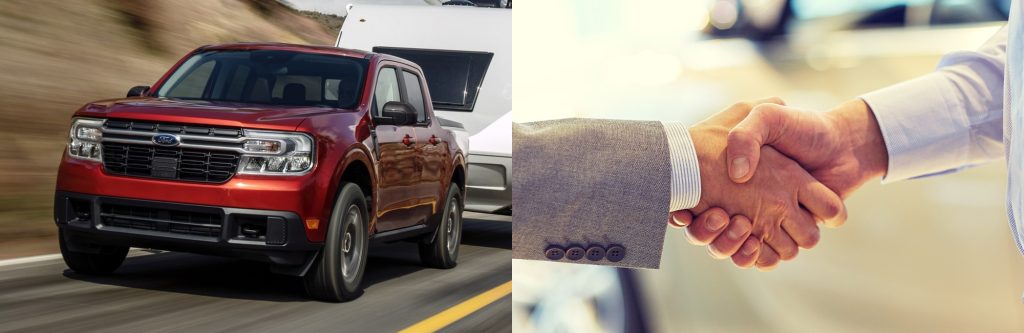
New vs. Used Car Interest Rates: Weighing the Numbers Game
Interest rates are a significant factor influencing your overall car loan cost. While new car loans historically boast lower rates than used car loans, the actual difference might be narrower than expected. A good credit score can qualify you for a competitive rate on a used car loan, potentially negating the slight advantage of new car financing. Remember, interest rates are just one piece of the puzzle. Factor in the depreciation of a new car compared to the potentially lower purchase price of a used car in your research of new vs. used car financing. You might end up paying less overall, even with a slightly higher interest rate on a used car loan, if the depreciation of a new car is significant.
The Right Turn on Your Financing Journey
Ultimately, the decision between new vs. used car financing hinges on your individual needs and priorities. Do you crave the latest technology and features, or are you more budget-conscious? How long do you plan to keep the car? Evaluating these factors alongside the new and used car financing options will empower you to make an informed decision. Remember, there’s no one-size-fits-all answer. The key is to research, compare rates, and select the financing option that’s best suited to your financial goals. With careful planning and a bit of research, you’ll be well on your way to cruising down the road in your dream car! Visit Ken Wilson Ford to find your ride today!
*Flex Buy is unavailable in Maine, Michigan, New Hampshire, North Carolina, Ohio, Pennsylvania, Virginia and Washington, D.C.
Connect with us

